


What is myofascial release, and why does it feel so good?

You've rolled out a tight muscle and felt immediate relief. But what's actually happening under the surface? Here's the real science, explained simply.
First, what is fascia?
Fascia is a continuous sheet of connective tissue that wraps around every muscle, organ, nerve, and bone in your body. Think of it like a full-body wetsuit made of collagen. It gives your tissues shape, holds everything in place, and plays a big role in how force travels through your body when you move.
Healthy fascia is hydrated, supple, and slides freely. But when you sit for long periods, overtrain, get injured, or just live a busy human life, fascia can become dehydrated, sticky, or develop what practitioners call "adhesions," areas where the tissue loses its normal glide and starts restricting movement.
That's often the root cause of that nagging tightness that stretching alone never quite fixes.
Fascia doesn't stretch the way muscle does. It responds best to slow, sustained pressure. That's exactly what a good roller delivers.
So what does myofascial release actually do?
Myofascial release (MFR) is any technique that applies pressure to the fascial system to reduce tension, restore glide, and improve range of motion. It includes hands-on therapy from a trained practitioner, and self-myofascial release (SMFR) using tools like massage balls and rollers.
When you apply sustained pressure to a restricted area, a few things happen:
- The tissue warms and softens. Collagen-rich tissues respond to heat and pressure by temporarily becoming more pliable, a property called thixotropy. Basically, pressure helps things loosen up.
- Blood and fluid flow increases. Pressure followed by release creates a pumping effect that flushes out metabolic waste and brings in fresh, oxygenated blood, one reason it feels so good post-workout.
- Your nervous system relaxes. Sustained pressure activates mechanoreceptors in the fascia, signaling the nervous system to reduce muscle tone in that area. This is why the "release" often feels more neurological than purely mechanical.
- Adhesions begin to break down. Over time, regular pressure work can help remodel fascial tissue, reducing the sticky spots that limit movement and contribute to chronic tightness.
Good to know: A lot of the benefit from self-myofascial release is neurological. Your nervous system is responding to the pressure and choosing to reduce tension. This is why slow, deliberate work outperforms fast, aggressive rolling every time.
What are the actual benefits?
Research on self-myofascial release has grown significantly over the past decade. Here's what the evidence supports:
- Improved range of motion — even a few minutes of targeted rolling can meaningfully increase joint mobility
- Reduced delayed onset muscle soreness (DOMS) — post-workout rolling helps muscles recover faster
- Better movement quality — releasing restricted areas lets your body move the way it's designed to
- Pain reduction — especially for common issues like plantar fasciitis, lower back tightness, and hip flexor pain
- Pre-workout activation — light rolling before exercise can improve performance without the range-limiting effects of static stretching
Does it matter what tool you use?
Yes, and more than most people realize. A foam roller is great for large muscle groups like the quads and lats, but it can't get into smaller, targeted areas: the arch of your foot, your hip rotators, the muscles along your spine, or the base of your skull.
That's where a dual-ball or peanut roller, like the Rodo 2-in-1 Roller, really earns its place. The two-ball design creates a channel that lets you work directly alongside the spine without compressing the vertebrae, something a flat surface simply can't do. And the ability to go single-ball for pin-point pressure means you can address specific trigger points with real precision.
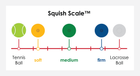
Density matters too. If you're new to this, start softer. Your nervous system needs time to adapt to the pressure before firmer tools feel productive rather than just painful.
How to do it well
A few principles that make a big difference:
- Go slow. Roll slowly and pause on tender spots. Sustained pressure of 30 to 90 seconds is more effective than fast rolling.
- Breathe through it. Deep breathing while on a tender spot actively helps your nervous system release. Don't hold your breath.
- Work within a 6 to 7 out of 10 on discomfort. Uncomfortable but not agonizing. If you're bracing or wincing, ease off. You're triggering a protective response, not a release.
- Drink water after. You've just encouraged fluid movement through tissue. Staying hydrated helps your fascia maintain that newly restored pliability.
Frequently asked questions
How often should I do myofascial release?
Daily is fine for gentle work, especially for areas you use a lot. For more intense sessions on sore or recovering tissue, 2 to 3 times per week gives your body time to adapt and respond.
Is myofascial release the same as a massage?
Related but different. Traditional massage primarily targets muscle tissue and circulation. MFR is specifically focused on the fascial system and typically uses slower, more sustained pressure. Both are valuable and complement each other well.
Can it make soreness worse before it gets better?
Sometimes, yes, especially in the first couple of sessions. A little temporary achiness after rolling is normal as your tissue adapts. If you're consistently more sore after rolling, ease up on pressure or frequency.